Table of Contents
Quick Takeaways
- SEO = improving organic search visibility through technical, on-page, and off-page optimization.
- You can do SEO yourself — the fundamentals are accessible to anyone.
- AI tools assist but don’t replace human expertise and genuine content.
- Search engines crawl, index, then rank pages based on hundreds of signals.
- Quality content is the #1 factor — create for people, not just search engines.
- Mobile-first is essential — most searches now happen on mobile devices
- Results take time — SEO is a long-term strategy (weeks to months).
- Avoid black hat tactics — penalties can remove your site from search results.
- E-E-A-T matters — demonstrate Experience, Expertise, Authority, and Trustworthiness.
- Stay current — search technology and AI are constantly evolving.
The Ultimate Search Engine Optimization (SEO) Starter Guide
Search Engine Optimization (SEO) is the practice of improving a website’s visibility in search engine results pages (SERPs) to attract more organic (unpaid) traffic . It’s about helping search engines understand your content and helping users find your site . This guide covers the foundational principles and practical techniques you need to start your SEO journey.
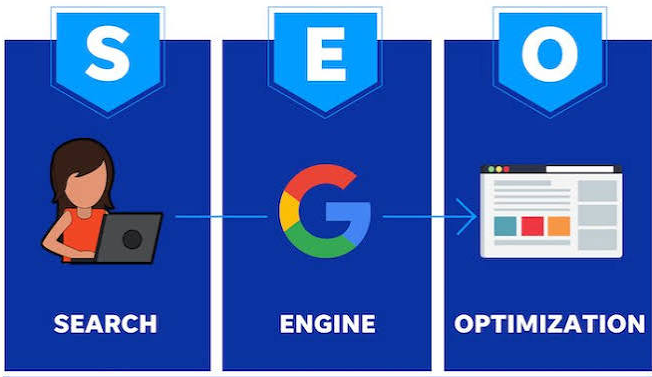
What is SEO and Why Does it Matter?
SEO stands for Search Engine Optimization. In the context of digital marketing, SEO is the process of getting traffic from free, organic, editorial, or natural search results in search engines . The goal is to improve your website’s position in search results pages. The higher a website is listed, the more people will see it .
Why is this important? According to studies on click-through rates, the first position on Google receives approximately 33% of clicks on computers, and the first three results account for almost 60% of all clicks on search engines. This demonstrates the critical importance of ranking well in organic search results for visibility and traffic.
How Search Engines Work
To understand SEO, you must first understand how search engines operate. Search engines rely on algorithms, which are computer programs that look for clues to give searchers the exact results they are looking for . These algorithms operate through three primary steps: crawling, indexing, and ranking .
1. Crawling
Crawling is the discovery phase where search engines send out web crawlers (also known as spiders or bots) to find new and updated pages . These crawlers discover web pages by following links from pages they have already found . Google uses programs called crawlers to explore the web constantly, looking for pages to add to its index .
2. Indexing
Indexing is the process where a search engine decides whether or not to use the content it has crawled. If a crawled web page is deemed worthy, it is added to the search engine’s index, which is a massive database of all the content that can be retrieved and displayed in search results . A web page might not be placed in the index if the content is considered duplicate, low value, spammy, or if it couldn’t be crawled .
3. Ranking
Ranking is the final and most important step. This occurs after a page has been crawled and indexed. Search engines use more than 200 ranking signals to sort and rank content, fitting under the three pillars of SEO: technical optimization, on-page optimization, and off-page optimization .
The Three Pillars of SEO
SEO can be broken down into three core components that you need to be familiar with and action regularly .
1. Technical Optimization
Technical Optimization is the process of completing activities on your site that are designed to improve SEO but are not related to content . It often happens behind the scenes. A simple example of technical optimization is submitting your sitemap to Google . Ensuring search engines can crawl and index your site effectively is the foundation of technical SEO.
Core technical SEO elements include:
- Crawlability and Indexability: Ensuring search engine bots can access and understand your site’s pages . This involves using a
robots.txtfile to guide crawlers and submitting an XML sitemap to tell search engines which pages are important . - Site Speed: Page loading speed is a crucial ranking factor. Fast-loading pages lead to better user experience and higher rankings . Tools like Google PageSpeed Insights can help you test your site’s performance .
- Mobile-Friendliness: With over 60% of searches occurring on mobile devices, Google uses mobile-first indexing, meaning the mobile version of your website is the starting point for what Google includes in its index .
- Site Architecture: A logical site structure with clear directories helps search engines and users understand how your pages relate to each other . For larger sites, grouping topically similar pages in directories can help Google crawl your site more efficiently .
- HTTPS: Google recommends that websites use HTTPS rather than HTTP to improve user and site security .
2. On-Page Optimization
On-Page Optimization is the process of ensuring the content on your site is relevant and provides a great user experience . This involves targeting the right keywords within your content and can be done through a content management system .
Key on-page elements include:
- Keyword Research: This is the backbone of SEO. It is the process of identifying the terms and phrases your target audience uses when searching for information, products, or services . Effective keyword research gives you ideas for what content to create .
- High-Quality Content: Creating compelling and useful content is likely the most important factor for your website’s presence in search results . Content should be easy to read, well-organized, unique, up-to-date, and people-first . When writing, use words that people would use to look for your content and place those words in prominent locations such as the title, main heading, and other descriptive locations .
- Page Titles (Title Tags): The title link is the headline part of the search result and it can help people decide which search result to click . A good title is unique to the page, clear, concise, and accurately describes the page’s contents . Titles should be under 60 characters for optimal display .
- Meta Descriptions: While not a direct ranking factor, a meta description is a short summary of a page’s content that appears below the title in search results. A good meta description is short, unique, and includes the most relevant points of the page to improve click-through rates .
- Headings (H1-H6): Structuring content with headings helps both users and search engines navigate your pages . The H1 is the main heading, and subsequent headings (H2, H3, etc.) create a logical content hierarchy.
- Image Optimization: Images should be high-quality and placed near relevant text to provide context . Descriptive alt text is crucial as it helps search engines understand what the image is about and improves accessibility .
- URL Structure: Using descriptive, clean URLs that include relevant keywords can help users and search engines understand what a page is about . For example, use
example.com/pets/cats.htmlinstead ofexample.com/2/6772756D707920636174. - Internal Linking: Links to other relevant pages on your site are a great way to connect users and search engines to other parts of your site . Using descriptive link text (anchor text) helps users and search engines understand what the linked page contains .
3. Off-Page Optimization
Off-Page Optimization is the process of enhancing your site’s search engine rankings through activities outside of the site . This is largely driven by high-quality backlinks, which help to build the site’s reputation .
Core off-page elements include:
- Backlinks: Links from other websites that point to your pages are seen by search engines as a vote of confidence and authority . The vast majority of new pages Google finds every day are through links . Focus on the quality and relevance of links rather than sheer quantity .
- Social Signals and Engagement: While social media links are not a direct ranking factor, social media activity can indirectly affect SEO through increased brand awareness and referral traffic .
- Brand Promotion: Promoting your content through social media, community engagement, and word-of-mouth leads to faster discovery by users and search engines .
Setting Up Your Website for SEO Success
Choosing the Right Platform
Your Content Management System (CMS) and hosting provider can significantly influence your SEO results . A good CMS gives you control over your URLs, metadata, headings, and internal links without needing to touch code. Platforms like WordPress are popular for balancing user-friendly design with deep SEO customization . Your hosting affects everything from site speed to uptime, which are both critical for SEO .
Helping Google Find Your Content
You can check if Google has already found your content by searching site:yourdomain.com . If you see results, your site is in the index. Google primarily finds pages through links from other pages it has already crawled . A key action to encourage discovery is submitting a sitemap, which is a file that contains all the URLs on your site that you care about. Some content management systems may even do this automatically for you .
Controlling What Content Gets Indexed
If you want to opt out of having certain pages appear in search results, you can use a variety of methods. You can instruct crawlers not to crawl certain files or directories through the standard robots.txt file . Additionally, a page can be explicitly excluded from a search engine’s database by using a noindex robots meta tag . This is a more reliable way to prevent a page from appearing in search results .
Using Canonical Tags
Some websites show the same content under different URLs, which is called duplicate content . While having duplicate content isn’t a spam violation, it creates a poor user experience and can waste crawling resources . Search engines choose a single canonical URL to show users for each piece of content . You can specify the canonical version for your pages using a canonical link element or a 301 redirect to avoid this issue .
Advanced SEO Techniques and Current Trends
Generative Engine Optimization (GEO)
With the rise of AI-generated summaries and “zero-click” searches, a new concept called Generative Engine Optimization (GEO) has emerged . This is a new version of SEO that takes into account the fact that search results are being impacted by AI companies and AI overviews . The strategy is to optimize your content to be included in AI answers . Frameworks like Google’s E-E-A-T guidelines—Experience, Expertise, Authoritativeness, and Trustworthiness—are believed to be important for anticipating what search engines and their AI tools will prioritize .
E-E-A-T (Experience, Expertise, Authoritativeness, Trustworthiness)
E-E-A-T is a component of Google’s Search Quality Evaluator Guidelines . It serves as a framework for evaluating the quality of content. Content that demonstrates real-world experience, expert knowledge, authority on the topic, and trustworthiness is more likely to perform well . This is especially critical for “Your Money or Your Life” (YMYL) topics that can significantly impact a person’s health, finances, or safety.
Long-Tail Keywords and Search Intent
Focusing on long-tail keywords—longer, more specific phrases—is a core strategy . While they have lower search volume, they are less competitive and attract users with more defined needs or actions in mind, making them valuable for targeting niche audiences . It is also important to understand search intent: the reason behind a user’s query. Is it informational (looking for answers), transactional (ready to buy), or navigational (looking for a specific site) ? Creating content that aligns with this intent is crucial for ranking.
Avoiding Common Misconceptions
There are several SEO myths that should be ignored:
- Meta Keywords: Google Search does not use the keywords meta tag .
- Keyword Stuffing: Excessively repeating keywords is a poor user experience and is against Google’s spam policies .
- Minimum Content Length: The length of content alone does not matter for ranking purposes. There is no magical word count target .
- Domain Name Keywords: The keywords in the name of the domain or URL path have hardly any effect beyond appearing in breadcrumbs .
Measuring Your SEO Success
Google Search Console
Google Search Console is an essential free tool that helps you monitor and optimize your website’s performance on Google Search . It provides reports to fix errors, track keyword rankings, and see which queries drive impressions and clicks .
Google Analytics 4 (GA4)
Google Analytics 4 is a powerful tool for measuring traffic, engagement, and conversions while understanding how users move through your site . Key metrics to monitor include organic traffic, bounce rate, page views, and conversion rates .
Tracking Engagement Metrics
In the era of AI search, tracking deeper metrics is becoming more important than raw clicks . Measures such as time on page and user journeys within the site provide a more nuanced measure of a site’s true success . These engagement metrics indicate whether visitors are actually finding your content valuable.
Conclusion
SEO is a continuous process of improvement, not a one-time task. It requires patience, as changes can take weeks or even months to show noticeable impact . By focusing on the core pillars—technical optimization, on-page optimization, and off-page optimization—and adhering to best practices like creating people-first content, you can build a strong foundation for long-term SEO success. As the search landscape evolves with AI, it’s important to stay informed and adapt your strategies, but the fundamental principles of providing value to users remain the same.
References & resources:
Search Engine Optimization (SEO) Starter Guide by google search Central.
Search engine Marketing by wikipedia.
What is SEO search optimization?
SEO (Search Engine Optimization) is the practice of improving a website’s visibility in organic (unpaid) search engine results to attract more relevant traffic. It involves optimizing technical infrastructure, content, and authority signals to rank higher in search results.
What is SEO in digital marketing?
SEO is a fundamental digital marketing strategy that drives organic traffic to websites alongside paid advertising (PPC), social media, and content marketing. SEO + SEA (Search Engine Advertising) = SEM (Search Engine Marketing).
What does SEO stand for?
SEO stands for Search Engine Optimization. The term came into use in 1997 and refers to all techniques used to improve a website’s position on search engine results pages.
Can I do SEO myself?
Yes! Anyone can learn and implement basic SEO including creating quality content, using descriptive titles and headings, adding alt text to images, and ensuring mobile-friendliness. Technical SEO may require professional help for complex issues.
Can ChatGPT do SEO?
ChatGPT can assist with content ideas, drafts, and keyword suggestions but cannot replace human expertise in strategy, competitor analysis, backlink building, or demonstrating genuine E-E-A-T (Experience, Expertise, Authoritativeness, Trustworthiness). Use AI as a tool, not a replacement.
How does SEO work?
SEO works through three processes: crawling (search bots discover pages via links), indexing (pages are added to search engine databases), and ranking (algorithms evaluate hundreds of signals to determine relevance). Creating helpful, authoritative content is the most effective strategy.
What are the main SEO criteria?
The main criteria are on-page optimization (content, titles, headings), off-page optimization (backlinks, authority signals), technical optimization (site speed, mobile-friendliness), and user experience (bounce rate, engagement). All work together to improve search rankings.
What are search engine optimization techniques?
White hat techniques (recommended) include quality content, natural keywords, and earning backlinks. Black hat techniques (avoid) include keyword stuffing, hidden text, and link manipulation which risk search engine penalties. GEO (Generative Engine Optimization) is an emerging technique for AI search.
Do I need to submit my website to search engines?
Not usually—most sites are found automatically through links. However, submitting a sitemap and using Google Search Console can help search engines discover your content faster. Check if you’re indexed by searching site:yourdomain.com.
How long does SEO take to show results?
Minor changes may show in hours, but significant SEO improvements typically take several weeks to months. Google makes over 500 algorithm changes yearly, so patience and consistent effort are essential. Not all changes will produce visible results.
How do I influence how my site looks in search results?
You control the title link (headline) through your <title> tag and the snippet (description) through your meta description tag or page content. Use unique, clear, concise titles (under 60 characters) and compelling descriptions (around 155 characters) to improve click-through rates.
How do I know if my SEO is working?
Use free tools: Google Search Console (track rankings, clicks, impressions) and Google Analytics 4 (measure traffic, bounce rate, conversions). Monitor organic traffic, keyword positions, click-through rates, and engagement metrics like time on page.
What is mobile-first indexing?
Google predominantly uses the mobile version of your website for indexing and ranking. Since mobile searches exceed desktop (51.3% in 2016), ensure your site is mobile-responsive, fast-loading, and has the same content as your desktop version. Test with Google’s Mobile-Friendly Tool.
What is a sitemap and do I need one?
A sitemap is a file listing all important URLs on your site to help search engines discover content. You should use one for large sites (hundreds+ pages), new sites, or those with poor internal linking. Most CMS platforms generate sitemaps automatically.
What is robots.txt and how do I use it?
robots.txt is a file in your site’s root directory that instructs search crawlers which pages to avoid (e.g., admin areas, shopping carts). It’s a directive, not a mandatory instruction. For guaranteed removal from search results, use a noindex meta tag instead.
What is the difference between SEO and SEM?
SEO focuses on unpaid organic rankings (long-term, no direct cost). SEM (Search Engine Marketing) encompasses both SEO and paid advertising (PPC). The formula is SEO + SEA (Search Engine Advertising) = SEM. Both can work together for maximum visibility.
What is Generative Engine Optimization (GEO)?
GEO (also called AEO or AIEO) is optimizing content for AI-powered search engines and AI-generated answers (like ChatGPT and Gemini). Strategies include content structure, authority signals, structured data, and demonstrating E-E-A-T to become a trusted, citable source.
Is E-E-A-T a ranking factor?
No, E-E-A-T (Experience, Expertise, Authoritativeness, Trustworthiness) is not a direct ranking factor but a framework from Google’s Quality Evaluator Guidelines. However, content demonstrating these qualities tends to rank better because algorithms reward trustworthy, authoritative content, especially for YMYL topics.
Is duplicate content a penalty?
No, duplicate content is not a spam penalty. However, it creates poor user experience, wastes crawl resources, and dilutes link authority. Use 301 redirects or canonical tags to specify your preferred URL version. Copying others’ content, however, is treated differently.
How important is PageRank today?
PageRank is still used but is now just one of hundreds of ranking signals, not the dominant factor it once was. Quality content, user experience, E-E-A-T, and relevant backlinks matter more today. Google advises: “There’s much more to Google Search than just links.”
Does keyword stuffing help rankings?
No! Keyword stuffing (excessively repeating keywords) is against Google’s spam policies, creates poor user experience, and can hurt your rankings. Use keywords naturally in titles, headings, and content where they make sense.
Is there a minimum content length for SEO?
No, there’s no magical word count minimum or maximum. Quality and usefulness matter far more than length. Longer content gives you more opportunities to rank for varied queries, but only if it adds genuine value.
Does the domain name’s keywords affect rankings?
Keywords in your domain name or URL path have hardly any effect beyond appearing in breadcrumbs. Choose a domain name that serves your business needs and brand—not one just for keywords. The TLD (.com, .org) only matters for country targeting.
Do meta keywords help with SEO?
No, Google Search does NOT use the meta keywords tag. It was ignored years ago due to abuse. Focus instead on quality titles, meta descriptions, headings, and actual content for better SEO results.
Leave a Reply